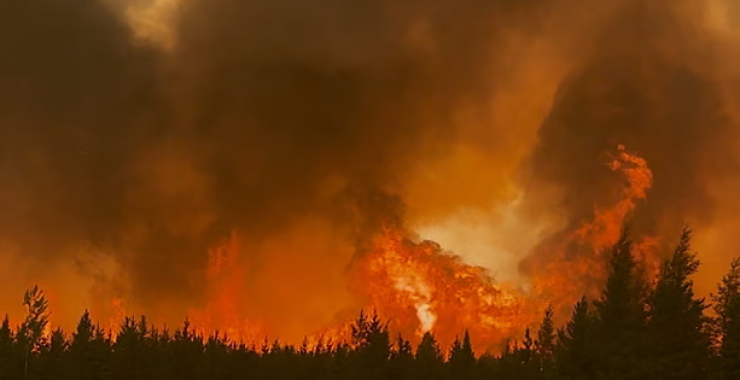
Canada Faces Second-Worst Wildfire Season on Record with Over 470 Fires Out of Control Canada is experiencing its second-worst wildfire season on record in 2025, with more than 470 active fires ...
13Aug


Seville – The 4th International Conference on Financing for Development
Ahmad Tamimi, General Manager of Amman Aviation & Travel Services Group, presented the company’s forward-looking vision through its affiliated Animal Welfare and Environment Association, established in 2023 as part of the Group’s commitment to the United Nations Sustainable Development Goals, especially Goal 13 (Climate Action) and Goal 15 (Life on Land).
Since its founding, the Association has delivered notable results, including:
Rescuing over 500 stray dogs, providing essential medical care and shelter.
Redistributing more than 700,000 kilograms of surplus food, reducing waste while feeding stray animals.
Launching Jordan’s first digital animal adoption platform, promoting responsible pet ownership.
Establishing a comprehensive shelter with a fully equipped veterinary clinic, rehabilitation center, and modern facilities to ensure long-term animal welfare.
The Association aims to link its mission with sustainable tourism initiatives by promoting ethical, environmentally conscious tourism practices. A flagship project in this vision is the revival of the “Egeria de Camino” trail, inspired by Spain’s renowned “Camino de Santiago,” to develop a religious pilgrimage route in Jordan.
The strategy includes integrating animal welfare and biodiversity conservation principles into tourism infrastructure, engaging local communities, launching awareness campaigns, and introducing sustainable food waste management and composting initiatives at pilgrimage sites.
Key goals include:
Preserving local ecosystems and biodiversity through responsible tourism for both domestic and international visitors.
Embedding animal welfare practices within tourism projects, particularly in rural areas connected to pilgrimage trails.
Promoting sustainable land use and waste management in tourism sites.
Raising community awareness and encouraging volunteering and civic engagement.
Building strong partnerships among government entities, the private sector, and civil society organizations.
Success relies on close cooperation with government bodies such as the Ministry of Tourism and Antiquities, the Ministry of Environment, and local municipalities, alongside civil society groups and the private sector. Key international partners include the United Nations Development Programme (UNDP), World Tourism Organization (UNWTO), International Union for Conservation of Nature (IUCN), the World Bank, and the European Union Delegation in Jordan.
This strategic direction aligns with several SDGs:
Goal 12: Responsible Consumption and Production.
Goal 13: Climate Action.
Goal 15: Life on Land.
Goal 17: Partnerships for the Goals.
It also supports the UN Global Compact’s Ten Principles, particularly those related to environmental protection, human rights, and anti-corruption within the context of ethical and transparent development.
Monitoring and impact assessment are ensured through quarterly reports measuring interventions in animal welfare, waste reduction rates, and environmental improvements at project sites. Feedback mechanisms include community surveys and stakeholder consultations, alongside audits to strengthen partnerships. Key indicators track biodiversity, carbon footprint, and stray animal population data.
By integrating animal welfare and environmental protection into tourism development—especially along the “Egeria Trail”—Jordan is paving the way for sustainable, ethical, and responsible tourism. This holistic approach enhances environmental resilience, promotes social justice, and strengthens the Kingdom’s position as an attractive destination for faith-based and eco-conscious travelers alike.